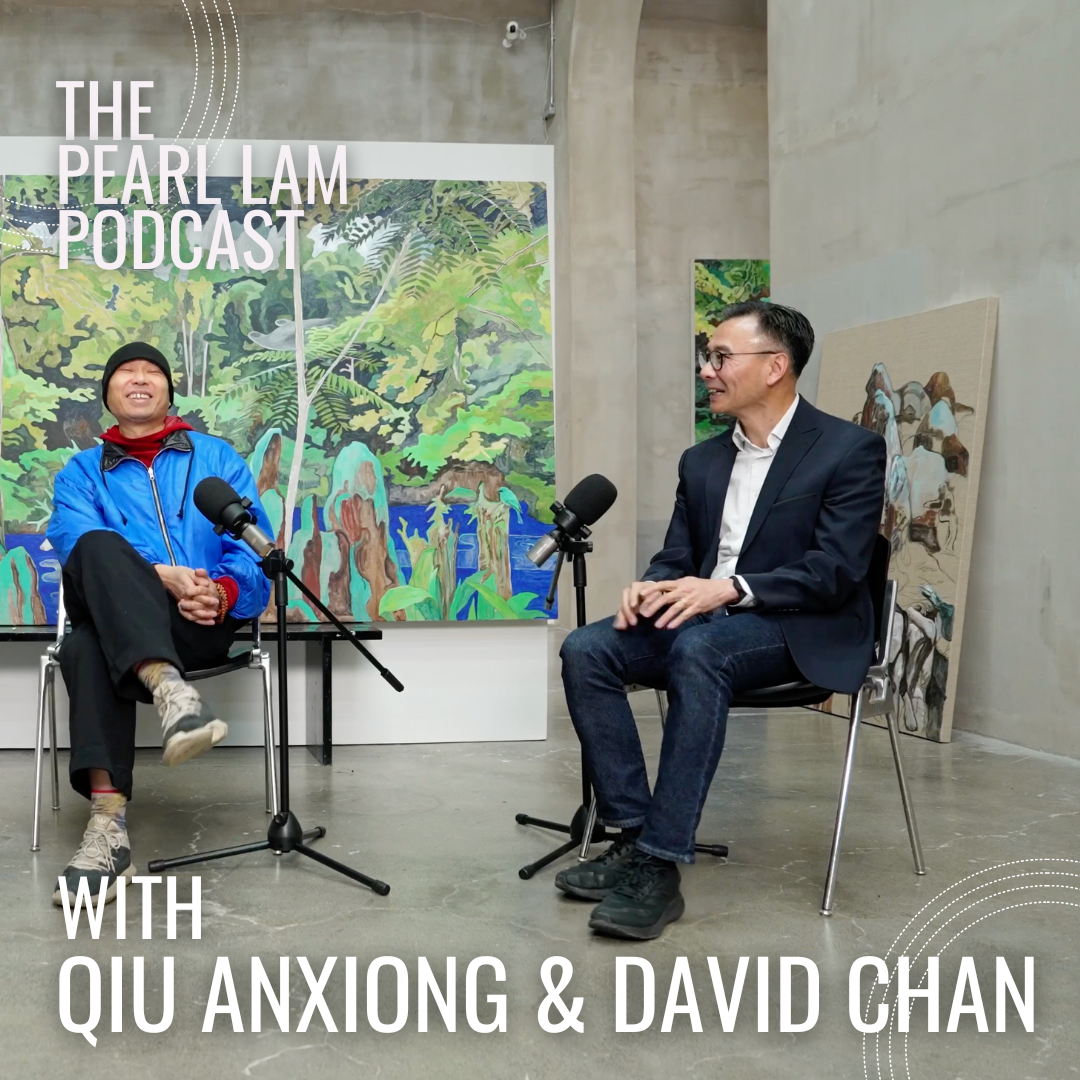
Pearl Lam (林明珠): Hello, this is Pearl Lam Podcast. I’m now in LA. I am sitting with Daniel McClean. Daniel, can you just give the audience a brief about yourself?
Daniel McClean: Well, I’m I guess an international art attorney based here in LA, practise in LA, practise in London, two different firms. I’m very lucky because I’ve been doing this for quite a while and I act for a lot of different people in the art world – artists, advisors, collectors, dealers, museums, curators, the whole spectrum. So I see the good, the bad and the ugly.
Pearl Lam (林明珠): What I realised when I was reading my brief that you were working in art world first.
Daniel McClean: Yeah, that’s right. I never thought I’d be a lawyer. When I was at university, I saw this Sol LeWitt show. It was like I loved art until then. My first job before, just a summer job in London was at Marlborough Fine Art. My first introduction, so I loved art and then I, I just became very interested in contemporary art after that Sol LeWitt show. So I ended up working at the Henry Moore Foundation. My first thing was to work on a construction of a Ganzfeld sphere with James Turrell.
Daniel McClean: It was insane. And so I just was introduced to all these experiences and I then I worked with Marian Goodman and I also, you know, worked in the art world internationally, ended up working with Fumio Nanjo in Tokyo and I was curating.
Pearl Lam (林明珠): Nanjo is a friend.
Daniel McClean: Nanjo san.
Pearl Lam (林明珠): Yeah, yeah, Nanjo is a friend.
Daniel McClean: And so I had a great, you know, experience. I went to the Courtauld Institute did a master’s there. And, you know, I always say, you know, I didn’t. Going into law was a kind of accident. I got introduced to copyright by my friend Karsten Schubert, who’s no longer with us, who once said, I want to do this book. I have Glenn Brown, my friend, has all these issues with appropriation art and lawsuits and copying other artists work because a lot of artists don’t think about copyright rules. That kind of made me curious. And I ended up doing a book on copyright and art and how they relate to each other, like legal, but also cultural perspectives. And that sort of began the journey into art law, which was when I decided to go to law school.
Pearl Lam (林明珠): It’s a big change, a big step. To take a plunge.
Daniel McClean: Yeah.
Pearl Lam (林明珠): And then to. To go and study law.
Daniel McClean: Yeah.
Daniel McClean: What a mistake, huh?
Pearl Lam (林明珠): But. But then you specialise in…
Daniel McClean: So then I work with great people. I train at Mishcon de Reya, there’s a great art law group there. Worked with Withers, then joined Mark Stephens in London. So I always work with great art lawyers, and I just was able to develop a practise around it. I think just, you know, one of the most important things about being an art lawyer is, you know, I say this to a lot of people, it’s a such a small niche area of law, but you really have to understand the market and the practice.
Daniel McClean: There’s no point doing it otherwise. You know, a lot of students say, I want to be an art lawyer. And I said, well, you know, get some experience, work in a gallery, intern in an auction house, understand…
Pearl Lam (林明珠): Understand the protocol and how things work.
Daniel McClean: Absolutely. And then that. So. So ironically, my experiences really served as a very good foundation for doing what I do because I understand it from both perspectives.
Pearl Lam (林明珠): So how did you start editing the book? Artists or Authorship and Legacy?
Daniel McClean: Well, that was like my third book with Karsten.
Daniel McClean: But I did one on copyright, one on trials, and then one on one.
Pearl Lam (林明珠): On trials as well.
Daniel McClean: Yeah. Yeah. But the authorsh one was the last one. And that. That was interesting because really the theme of the book
Pearl Lam (林明珠): It was interesting because I was looking at another summary. I said, how the hell. I said, when I talk to Daniel, we talk about deals and all that. Never knew that he’s a writer and an editor.
Daniel McClean: I’ve also curated a lot of great shows as well. But I’ll talk, let’s talk about book. So the book is really focusing on issues of authorship and authentication. And it’s really looking at how authorship is exercised during not just the lifetime of the artist, but also subsequently by other protagonists, like heirs and estate representatives and even, you know, connoisseurs, for example, or art critics who edit, catalogue, resume or committees. I mean, they have a huge power, as you know, in the art market. If a committee decides that something’s not authentic, then, you know, that effectively, you know.
Pearl Lam (林明珠): Everything becomes valueless.
Daniel McClean: Exactly. And so even. And third parties can be exercise authorship who have no necessary relationship even with the original artist. You know, I mean, I think Diego Giacometti Committee, for example, which was, you know, came out to really deal with the whole controversy with issues of Diego Giacometti’s work, was also, you know, I think it was a police officer for a while who actually ended up running a committee, you know, for a long time, because he was involved in getting rid of all of these fakes.
Pearl Lam (林明珠): All the fake pieces.
Daniel McClean: So who would have thought, you know, that an Inspector Clouseau is deciding what is authentic?
Pearl Lam (林明珠): But how could a police officer have the eye or the experience?
Daniel McClean: That’s a good question. I think there were other people who were assisting him. But even so, it’s really about how all of these issues really come down to sort of authority. Who has the authority in the in the art world to judge and then how are its decisions followed in practise? And, you know, the law can help arbitrate and resolve some of those disputes from time to time. But really, the art world has its own system. It has its own, you know, governors and custodians, and that’s what we all have to navigate.
Pearl Lam (林明珠): Recently, the Old Master market has been reviving.
Daniel McClean: Yeah.
Pearl Lam (林明珠): Now, the Old Master, we all know the most difficult is the authentication.
Daniel McClean: Yeah.
Pearl Lam (林明珠): So are you. Do you have any clients dealing with Old Masters?
Daniel McClean: I deal a lot with Old Masters.
Pearl Lam (林明珠): It’s really very, very difficult.
Daniel McClean: It is. And it’s interesting historically. One of the, there was a case involving a Van Dyck painting and its authorship and its sale. And in that case, a painting had been sold by an English gallery, and it had turned out that the experts, after its sale, decided it wasn’t authentic. And the buyer sued the gallery. And in the end, the buyer lost and the buyer lost. Because the English legal system has a, particularly for Old Masters, has this, even if it was described as being attributed to the artist, the attribution wasn’t considered to be a binding part of the contract. It was caveat emptor, buyer beware. So the risk was allocated to the buyer. And that actually is interesting. Historically that’s been a traditional position in English law with authentications, which is very much tied to the Old Masters. And the idea that how can anyone really know? Because there’s so much residual uncertainty with authentication from kind of historical perspective. So that is really, that is really fascinating. But you know, authentication comes in many different guises. It’s not always just about authorship. . It can also be about dating or, you know, if you look at a recent Damien Hirst scandal, for example, that was really about whether, you know, these works were from his vintage period in the 90s or not, which would make them more valuable.
Pearl Lam (林明珠): This is a way to do it, not to devaluate the work itself.
Daniel McClean: Exactly, exactly.
Pearl Lam (林明珠): But Old Master is a very, very difficult market because, I mean, authentication has been always a big, big problem.
Daniel McClean: I think there’s an interesting development when I was reading about this in relation to the Caravaggio that was sold recently, where AI has actually given it a determination that of sort of very, very high probability of being a Caravaggio in terms of. Now that always poses an interesting question because authentication is not just forensic. There’s always this subjectivity of connoisseurship. But I do think, but I do think that technology, particularly AI, can be of some assistance in there. It can’t be definitive, but it can help at least rule out things which I think almost like negatively. So you can prove a positive through removing negatives.
Pearl Lam (林明珠): Do you rely on blockchain then?
Daniel McClean: I have to confess, I’m a Luddite. My wife goes crazy. I’m not very technologically savvy. I don’t deal a lot with blockchain. I know I have a friend in London who’s kind of pioneering on blockchain, who runs Verisart. And I think it’s important. But I mean, my clients frankly do not use blockchain. And I think there’s been a lot of that sort of utopianism about technology and that, I think.
Pearl Lam (林明珠): But you were just talking about AI.
Daniel McClean: I know, I know, which surprises me. I didn’t think I would be discussing AI.
Pearl Lam (林明珠): If the AI could help to authenticate?
Daniel McClean: I think AI can help contribute to authentication and I think blockchain can also be useful in terms of, well, particularly when things are digitalized, but also belonging to the, you know, created as of now. I think if you’re looking about blockchain going forward retrospectively, dealing with issues of ownership and provenance and things historically, you still have issues. You have to make sure that the data and all the stuff. But I think, I mean, the promise, I guess of blockchain is creating a kind of lineage which is transparent from the creator to the subsequent purchases, which can’t be corrupted. Whether that is in reality a cause with reality is perhaps open to question, but at least there’s a tool there for discussion. I think one of the problems Blockchain doesn’t address though, which is part of the theme of the book going back to artist authorship and legacy, is that essentially artworks are kind of contingent objects that you know that the ownership is contingent, but also authorship is contingent. And even, even if you own something, which I mean, particularly if it’s. Even if you own an artwork by a certain artist, it can change over time. It can condition, can change. Artworks which aren’t painting may also be, for example, like conceptual artworks, like Sol LeWitt. You know, you have a wall drawing, that’s a question about how it’s iterated each time. So there’s an ongoing relationship, but it’s ongoing changes. But yeah, it’s changing and it’s fluid, but there’s an ongoing relationship between the artist or the owner and the artist or who exercises authorship. So this makes ownership of art as a kind of so-called assets very, very fluid and you know, works on liquid or fungible in the same way as other assets because, you know, there are always these issues built into them, these contingencies, you know. So who, which makes it interesting.
Pearl Lam (林明珠): Who owns the artwork then?
Daniel McClean: Well, I mean, obviously you would say the collector. But, but, but, you know, all the but ordered. The private collector or the purchaser. But there are so many limitations on ownership when you get to think about it, that exist in the artwork in the art world.
Pearl Lam (林明珠): That and even the IP, the IP always remain, remain with the artists, especially today’s world.
Daniel McClean: Yeah, yeah, well, and in moral rights, for example, so that an artist can say, you know, object to how a work is treated by its owner. So they wrote that’s a constraint, the right of the integrity right. There are things which are limitations on ownership in a positive way. And then you have also in terms of, like with cultural property issues of, you know, cultural heritage, export, all of these restrictions, you know, even if you own something technically in terms of its ownership provenance, it may not. It may come from a country of origin which has export regulations, which can then be another, you know, encumbrance. You know, so complex.
Pearl Lam (林明珠): So what you’re saying is, Daniel, your job is very interesting.
Daniel McClean: I hope it is. I think. I think it is interesting. I think I’m lucky.
Pearl Lam (林明珠): You know, spinning into many different areas.
Daniel McClean: No, it’s also, I mean, I feel very privileged because I, you know, I’ve got to meet a lot of great people and I have fantastic clients. And the sadness is that a lot of what I do is very, you know, it’s discreet, it’s confidential. And so I have this sort of, you know, books and books of stories I would like to be able to share, which are kind of privately held.. But. But I guess I also see a lot of things, you know, I’m privy to a lot of things which, like I said before, the good, the bad and the ugly. I see, you know, the crazy stuff that goes on in the in the art business, which we’re, you know, because at all ends, and particularly the high end with the speculation. But I mean, I love working with artists and I do a lot of commissioning agreements. I wrote a book actually, on commissioning art co wrote with Louisa Buck about 10 years ago, it’s a Thames and Hudson book. It’s pretty interesting and it looks at different models of commissioning. And I’m really lucky at the moment because I’m the council on the art projects for Powder Mountain, or Powder Art Foundation. That’s something I can publicly say. And this is an extraordinary project that’s being created in Utah. It’s on a mountain ski resort and it’s going to become the inner team of America. So, you know, there’s a whole, in partnership with the Deer foundation and Reed Hastings from Netflix was the sort of was the commercial force behind it then, has created this foundation. It’s absolutely fantastic. And so that’s wonderful working on that. I’ve also worked on, as we will talk about later.
Pearl Lam (林明珠): Luna Luna, which is a very interesting, fascinating, let’s wait. I think that’s a very exciting project. I will wait for you to enlighten all of us.
Daniel McClean: Absolutely.
Pearl Lam (林明珠): I mean, I think the next thing I would really like to talk to you about is many artists, they are creating foundation. I mean, I know a lot of artists in China, but they are. I mean, they are overseas. I mean, they have spent their career overseas. They returned to China, they are elderly. They all now are creating a foundation to protect their legacy and they want, after they pass away, the artwork will continue to be exhibited to gain values and all that. What do you think about these foundations?
Daniel McClean: Broadly, I think it’s a very good thing and obviously.
Pearl Lam (林明珠): But the thing is, you look at Motherwell, you know, Motherwell did have a foundation but then unfortunately he gave it. He gave the directorship to a studio manager which hasn’t done a great job.
Daniel McClean: This is an important point. One of the key aspects with legacy planning in terms of any structure that’s implemented, but it’s particularly key for foundations is who do you appoint to be your custodians? Because the foundations are the custodians of legacy. And so that’s one of the critical questions. And if you get that wrong or if there are conflicts with the estate like you had with the trustees with the classic Roth go more book estate, you have those issues. But I mean, appointing the right custodians is really essentially, you know, an essential part of it. I think also having a kind of. You need to. There needs to be flexibility in planning and also a kind of maybe an understanding. Not the. The purpose of the foundation is not to last forever. I think I heard a great talk that Lisa Lefebvre gave, who runs the Holt Smithson foundation and she’s fantastic and she was talking about sunset provisions and you know that this foundation doesn’t go on forever, that it has a kind of reaches a point of the. Of to realise legacy. It’s not a kind of. There has to be a sunset. There’s not, there’s not just a perpetual, you know, it’s not a. It’s not. There’s often the illusion. But it’s not just a perpetual ongoing thing that it’s time to certain kind of deliverables or. And I think that’s really interesting.
Pearl Lam (林明珠): I mean, I mean some of the foundations, they do not sell all the artworks. So some of the artworks, they maintain a quantity of artworks for museum exhibitions and all that. So obviously they should not have sunset clothes then.
Daniel McClean: Well, I mean, if they’re well endowed. They are. It depends on. I mean, it depends on how they set up. Yeah, it depends on how they’re set up. I mean, but in a sense, only a few, a handful of very, very wealthy artists, undoubted foundations have the kind of resources and means to continue for, you know, a long period of time. And obviously you have great foundations like the Andy Warhol Foundation that’s done extraordinary things for. Keith Haring Foundation, I mean these, these foundations have really what I like about them as well as being able to support the legacy of the, of the, of the artists. They’ve also expanded the notion of legacy in terms of protect doing things within the art world generally. And I mean I’m a beneficiary of that. I. My first real education in the art world was at the Henry Moore Foundation.
Pearl Lam (林明珠): Yes.
Daniel McClean: And look, I mean Henry, there weren’t many artists who did this who had the sort of wealth or the foresight to do this in the England. England’s a relatively poor country compared to the U.S. but you know, he did it and he created an extraordinary, you know, and the important, the legacy is amazing. And Henry Moore has just also supported so many. It’s such an important supporter of exhibitions and institutions and it has the institutions.
Pearl Lam (林明珠): And support of artists as well.
Daniel McClean: Yeah. And that’s really, that’s very important for the ecology so of the art world. So I’m passionate believer in artist foundations, but I think that they also, there need to be these questions asked about custodianship. How, you know, and also the having just the means to, you know, to be able to exist for a viable period of time. You know, I mean, maybe there should be some sort of foundation for foundations where you almost have a collection of foundations. So the individual foundations that are not sufficiently wealthy enough in themselves join forces. I’ve been discussing this recently with various people in the art world and I think it’s a kind of interesting possibility that it’s like a collocation of collection of foundations within a platform. And so they work together almost like in a kind of cooperative way because individually there are insufficient resources for those, those individual artists foundations really to function, you know.
Pearl Lam (林明珠): Right.
Daniel McClean: But it, but it’s expensive. I’ve worked with a lot of artist estates, and you know, it’s. It just doing and helping manage the relationship between the gallery and the estate and just the whole custodianship of all of these things are, you know, [promotion, marketing, you know], stewardship, storage, insurance, you know, intellectual property, all of these things require huge amount of resources are, you know.
Pearl Lam (林明珠): Now I just wonder, do you see artwork as an investment asset?
Daniel McClean: I don’t personally, I have clients who do. But I think it’s a great question. I think it’s, I think it’s a very flawed asset if it is an investment asset.
Pearl Lam (林明珠): The reason why I’m asking and stating that is that many galleries, including ourselves, we, we try to protect the artists. I mean the artwork values.
Daniel McClean: Yeah.
Pearl Lam (林明珠): So we always have a 5 years, 3 years, 5 years, a non sale agreement.
Daniel McClean: Yeah.
Pearl Lam (林明珠): When you buy, when you buy the artworks, is it, I mean, we, we have been confronting different, different occasions, different things. Do you actually think that it is enforceable?
Daniel McClean: I mean, there’s a lot of discussion about this. I mean, I think it’s much. What is enforceable is if it’s constructed as an option agreement with an, you.
Pearl Lam (林明珠): Actually, I did sue.
Daniel McClean: You did?
Pearl Lam (林明珠): Yes, I did. In Hong Kong, I did.
Daniel McClean: But as an out, as a, there is some consent, there is some movement towards accepting that even outright restraints on resell, like at public auction for a reasonable period of time are enforceable. But you know, historically the position is that if you sell property, you can’t encumber it. So a restraint on alienation through a non resale prohibition is, you know, looked down on by the court, certainly in England and America. But I think that
Pearl Lam (林明珠): Hong Kong is better because we did it in Hong Kong and in China.
Daniel McClean: But a way around it is to structure it as a, you know, the gallery has a right to first refusal to purchase the work or is it signed and then you’re on much safer territory. I mean, that still has to be, you know, that still can’t go on in perpetuity. But if you tailor that as a five, ten year, you know, probably five years kind of option, you know, RFO or option, you, you, you’re in a better, you know, you’re in, you’re in a sort of territory where you can enforce that, you know, and artworks were being flipped and you’d have artwork artists coming out.
Pearl Lam (林明珠): They flip so high!
Daniel McClean: And they would go out of school and then your works would be 150 through 200, 300,000. And that kind of stratospheric rise of younger artists seems to be slightly in abeyance right now, I’d say, of course.
Pearl Lam (林明珠): Because if you, you know, today’s market is not exactly a great market. So let’s talk about.
Daniel McClean: I mean, it’s interesting. I work in your secondary market. I do a lot of transactions for, for clients who are in on a secondary level with high blue chip. I. There’s a lot of movement there. I mean, partly, I think, you know,, I think it’s deals are to be had and you know, it depends on obviously whether sellers wish to have to sell or need to sell. But if they do, then I think it’s a good time to buy.
Pearl Lam (林明珠): It is a buyer’s market.
Daniel McClean: It’s a buyer’s market.
Pearl Lam (林明珠): Yeah, it’s a buyer’s market is and is depending on whether the seller, as you said, is willing to sell. And also.
Daniel McClean: Yeah.
Pearl Lam (林明珠): Whether, whether the buyer, now the buyer has the opportunity to buy really premium best work. If they are willing to pay a bit of a premium as well. I mean, as soon as the market is better. Too many competitions.
Daniel McClean: Yeah, no, no, absolutely.
Pearl Lam (林明珠): I mean, so, so you. Do you feel it is the downturn of the market? Do you feel it? Because for us, Gallery. Definitely we feel.
Daniel McClean: I think it will. I think it depends. I mean the auction data and sales and all the stuff from Sotheby suggest that sales were radically declining. And you know, you’ve had that sort of apocalyptic publishing of data about gallery sales in the Hauser in London.
Pearl Lam (林明珠): Davis, Hauser & Wirth.
Daniel McClean: But, but I think those, I think that, I think that information, you know, is obviously you have to give that credence in terms of, but in terms of what happens on a secondary private market which is not reported.
Pearl Lam (林明珠): Absolutely.
Daniel McClean: At a high level. It’s, it’s, I think it’s, it’s still vibrant. It’s vibrant.
Pearl Lam (林明珠): Ye, yeah, it’s vibrant. And that’s why.
Daniel McClean: Same craziness, you know, that’s why Daniel, you’re so busy. But it’s a very interesting world. I mean you’ve got, you know, things which are. And it’s interesting because I think we were talking about this earlier on. It’s not a fully transparent world. It’s a very private world. There are smoke and mirrors, there’s hidden principles, hidden buyers, hidden sellers and you know, agents, intermediaries. This makes it complex. And one thing I’ve noticed recently dealing with, you know, the auction houses is with the anti money laundering requirements that gives transparency. But then they’ve also created situations where the compliance departments hold that information, but they do a kind of, as it were, Chinese walls where they segregate information. And I think that’s a really interesting kind of technique in a sense because it’s sort of, it’s a way of accommodating transparency, but within the art world market, but also still preserving realms of secrecy and confidentiality.
Pearl Lam (林明珠): This is one of the very important things that I would love to hear your opinions, you know, because art world is known to be opaque.
Daniel McClean: Yes.
Pearl Lam (林明珠): Okay. So do you think transparency is needed?
Daniel McClean: I don’t think. I mean, if there’s a point in which it’s not so much even if it’s needed, I just don’t think the market as we know it is. The inefficiencies of the market are linked to its opacity. And I don’t see that changing fundamentally.
Pearl Lam (林明珠): Because with the AML, I think when they first came out, everybody was jumping because you have to release the seller’s name, the buyer’s name. Everybody’s really reluctant. So everybody comes to Hong Kong because Hong Kong, we don’t have AML rules.
Daniel McClean: Yeah, no, no. I mean, and that’s. That’s happened to a degree in the US as well. But I think that AML is becoming more universal. But even when it’s becoming universal, there’s still ways in which, you know, communication can occur without whilst retaining opacity, if you like. So I don’t think the art world at some level will fundamentally ever change. And I think if it does, it becomes a very different world. But ultimately it isn’t a market like other markets. It’s a unique market.
Pearl Lam (林明珠): But my question, my question has always been that, okay, your AML, because of AML, you have to ex. You have to release the seller’s name, the buyer’s name. But does the auction house ever release the buyer’s name or the seller’s name? They don’t.
Daniel McClean: Well, they, they can. Yeah, they can hold that information, depending on. But then they have to get the consent of if they’re selling, for example, in a product.
Pearl Lam (林明珠): I mean, a lot of sellers doesn’t want people to know that they’re selling.
Daniel McClean: They, they. You know, I think parties can find a way of retaining anonymous.
Pearl Lam (林明珠): And so actually it really is defeating what AML is actually trying to. Because they want transparency. I don’t think I agree with you. I don’t think that art world is ready for this transparency at all.
Daniel McClean: No.
Pearl Lam (林明珠): Okay, so please tell us your project, your Luna Luna.
Daniel McClean: Oh, Luna, Luna. Did you ever get to see it?
Pearl Lam (林明珠): No.
Daniel McClean: Well, Luna Luna is a fascinating story. It was an art amusement park, the world’s first ever art amusement park that was created in 1987 by a curator, Andre Heller, who was an Austrian artist in Presario. And he had had this dream of getting all these different artists to make an art amusement park where the artists create the rides, design them, etc.
Pearl Lam (林明珠): I would love to go.
Daniel McClean: And he found the money in the 80s from a German publishing company to commission all of these artists. And he found 33 different artists and they produced this wonderful works which were then shown in Hamburg in the summer of 87, briefly, but it included a Ferris wheel by Basquiat and Keith Haring did the most incredible work, he painted the carousel and David Hockney did a labyrinth and Dali and Sonia Delaney and all these great artists of the 20th century. It was a very incredibly fun hybrid project. And it was super interesting because it just disappeared. I mean, it was done before 89 was when the Cold War sort of officially ended in Europe and while globally and the Berlin Wall and, you know, it was a permanent time just prior to then. And these artworks were never shown again. They went into storage. They were acquired eventually by US Foundation. Andre Heller was forced to sell the work through US Foundation. And then there was a dispute which lasted almost 20 years, dispute on work over whether they would buy the work or not. So they tried to. There was a dispute over their sale. And so eventually there was this litigation and the artworks ended up going from Vienna to Texas in 2007 after literally litigation from earlier decades, decades of litigation. And then it went. They. The containers were you know, were in the middle of Texas, nowhere near the Oklahoma border and land owned by this foundation. And I went to see them in 2008 with somebody who was interested in purchasing them. I then became obsessed with the projects and formed a company with Andre Heller to buy them. And then one day, around 2021, I think, we were contacted by Dreamcrew, that’s Drake’s production company, and Drake the rap star. And they said, I want to buy this. We’ll create a company with you and we’ll go and buy it. So it was like an extraordinary thing because I was there negotiating with their lawyers, doing a deal. But the deal terms were extraordinary because they were literally, you buy these containers as is, sight unseen. So we didn’t know what condition was. And we, you know, paid millions of dollars, bought everything and transported the containers from Texas to Los Angeles and downtown LA in a Boyle Heights area in a giant warehouse. We opened everything up in LA and restored it. It was in fantastic condition. And not only that, there was all this merchandise, original merchandise that was in the containers, like T shirts. And so we kind of lucked out. We brought it back to life. We restored a lot of it and then did a big exhibition in downtown LA.
Pearl Lam (林明珠): When was that?
Daniel McClean: That was in 20. That was like. That was two years ago. Then it went to New York to The Shed. And it was in The Shed last year. It finished just before Frieze last year.
Pearl Lam (林明珠): Oh, no.
Daniel McClean: So no. November 24 to March 25, something like that.
Pearl Lam (林明珠): Now where is it now?
Daniel McClean: Now it’s in storage still. And we’re. We’re touring it. We’re. We’re. We’re touring it around the US and then.
Pearl Lam (林明珠): So it’s no longer a fun park.
Daniel McClean: It’s. Why can’t you make me get it in? It will do what the rides you. Unfortunately, the rides are not interactive anymore. You can’t ride on them. But their goal is to create new commissions and add fun stuff to it. What’s great about this project, Luna Luna is it was, you know, what a great way to introduce people to art. This is like art outside of the museum walls, right? It’s art for the public. It’s fun. It’s particularly for children.
Pearl Lam (林明珠): It’s great.
Daniel McClean: I mean, that’s why it was enchanting.
Pearl Lam (林明珠): Accessible.
Daniel McClean: Accessible and enchanting. And fun. And so, you know, like, Keith Haring loved it because of the whole childhood aspect of it.
Pearl Lam (林明珠): This is great.
Daniel McClean: And so it’s an incredible. It has so much potential. It’s really like a kind of lost treasure.
Pearl Lam (林明珠): Why did they stop after they showing it in Germany? Right.
Daniel McClean: Because it. I mean, it got. It largely rained, it was in Hamburg, and in 87, Andre wanted to tour it around the world. It was slated to go around the world, and that fell through. And then he was in negotiations with the city of Vienna to sell it to the city, and that fell through. And so he was kind of forced to sell it to this foundation in the US which is a philanthropic foundation. Fantastic foundation. But he. They weren’t real. They didn’t really have an expertise in art, and they wanted to bring it to San Diego originally. That was their plan, and in that. And then they. It didn’t work out. So, you know, this is having a theme park is very complex. It’s expensive. There are a lot of moving parts, of course, and it’s a kind of, you know, It’s an interesting project, and so it’s demanding.
Pearl Lam (林明珠): So when you first. Yeah, I mean, when you first saw this, this, this project, it completely enticed you?
Daniel McClean: It did. It was one of those things where it was just like, you know, it was so exciting and kind of. It’s like a lost treasure. I saw three or four of the works when I went to Texas in 2018, I think, and it was, you know, that was enough to like, see this was really an extraordinary thing.
Pearl Lam (林明珠): You got really excited?
Daniel McClean: Got really excited. And then, you know, there’s also elements of law and you know, there’s. It’s a very hybrid project as well and a lot of different people involved in the project, different partners and people with. It’s a very collaborative project and a lot of people expertise and know how from different, different disciplines. So I’m kind of really into that.
Pearl Lam (林明珠): Are you happy now with these two exhibitions when people just, just saw what, what you all have done? Yeah, I mean, bring it back to life.
Daniel McClean: It was like, it was the, the reception in New York at LA has been amazing. It’s been really, really good. And I think it’s, you know, but I hope.
Pearl Lam (林明珠): Congratulations.
Daniel McClean: But I hope it grows and I hope it goes to Asia. I hope it goes to see a lot of potential for it, you know.
Pearl Lam (林明珠): Yeah, but what is the next plan?
Daniel McClean: You know, I think, you know, the next, the next phase is to, is to tour the historical works. But ultimately the real vision is to build a, you know, the, the point to the contemporary art of, you know, amusement park of the future. You know, where you have rides by Murakami or whatever. Imagine
Pearl Lam (林明珠): Getting people to come?
Daniel McClean: That’s the long term plan. Yeah, definitely. And it, and it’s also, I mean, it’s also interesting. I’ve just, it’s weird how I’ve been able to be part of this and then also in a very different capacity with Powder Mountain. The Powder Mountain project. I mean, these are like two extraordinary projects which have been, you know, I’ve been lucky enough to be involved with, you know.
Pearl Lam (林明珠): Yeah. Sorry, Daniel, you don’t seem to be a lawyer. You’re more like an entrepreneur.
Daniel McClean: I’m more like an artist, I would say. I’m an art enthusiast. I’m an art enthusiast. That’s what I am. Yeah.
Pearl Lam (林明珠): And thank you so much, Daniel. Thank you for joining us.
Daniel McClean: Oh, it’s been wonderful. Joining me. Thank you. Great pleasure.
Pearl Lam (林明珠): Yeah, great pleasure. Thank you.
Daniel McClean: Thank you.