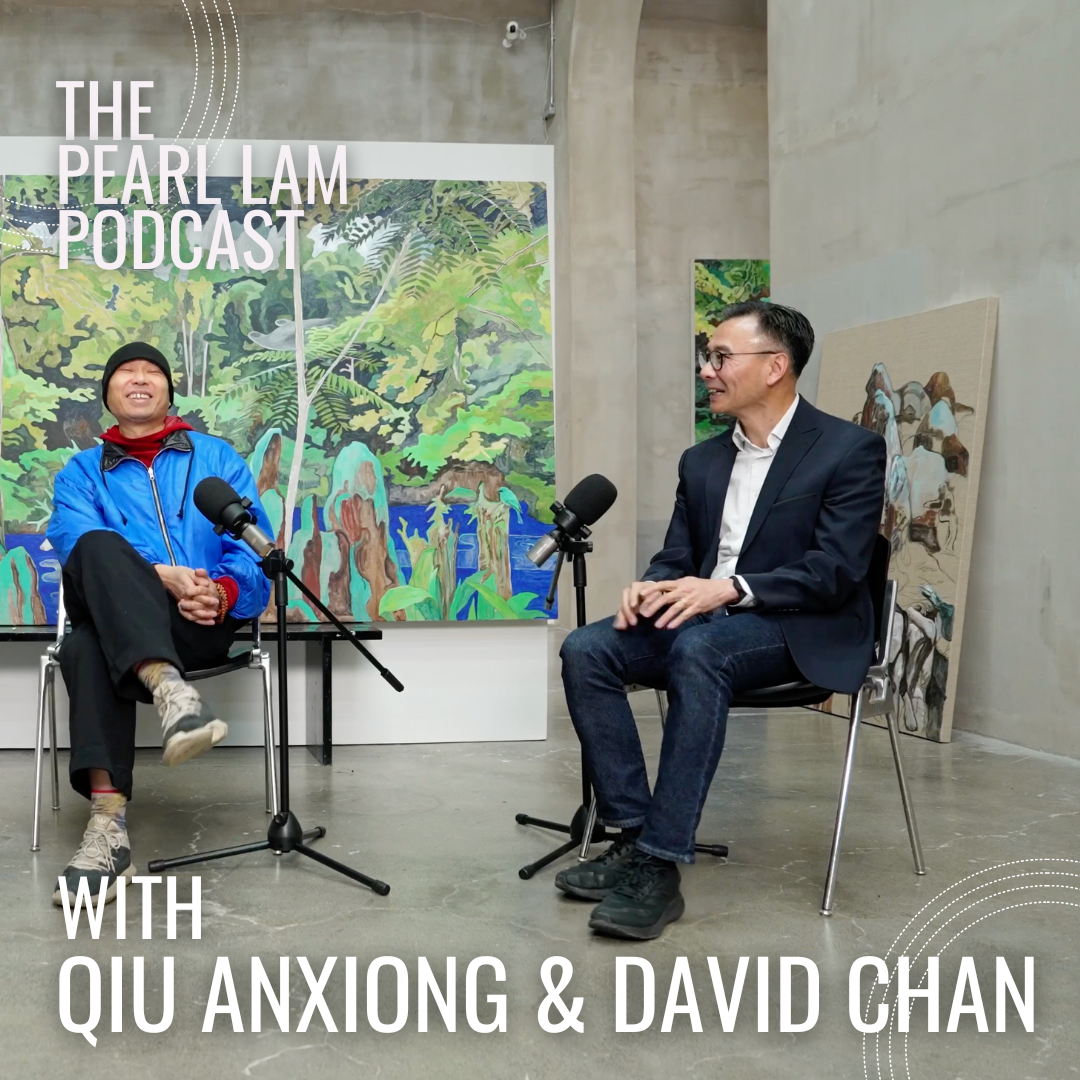
Pearl Lam (林明珠): Hello, this is Pearl Lam Podcast. I’m here in London sitting with Anders Petterson and I will let Anders introduce himself.
Anders Petterson: Well, thanks. Thanks Pearl. Thanks for inviting me to this. I mean, we met a year ago.
Pearl Lam (林明珠): More than a year ago.
Anders Petterson: Yeah, it was maybe a year and a half.
Pearl Lam (林明珠): Yeah, a year and a half ago. Well, two years ago.
Anders Petterson: Was it already two years?
Pearl Lam (林明珠): Yes, two years ago? Because when did we have another. We met each other at a panel.
Anders Petterson: I started to listen to your podcast after that. So it’s an honour to be here today. So I’m the founder and CEO of ArtTactic. I founded the company 25 years ago. It’s a company that purely focuses on research, particularly around the art market, but art market in a sort of a broader sense, the art ecosystem, not only looking at the commercial, but also looking at museums. We’re looking at philanthropy, patronage. And I guess I’ve had the kind of honour really to see how the market has evolved over the last 25 years. You have seen it also, you know.
Pearl Lam (林明珠): But Anders, you were a banker before, a JP Morgan banker. And how would a former banker and then start to find, to start finding this company. I mean there isn’t that sort of company.
Anders Petterson: No, I think it’s quite unique, the company which is purely focusing on what we’re doing. I think the transition from banking to art wasn’t as abrupt and brutal as it sounds like.
Pearl Lam (林明珠): I think it’s your passion.
Anders Petterson: Yeah, I had a passion for art, contemporary art particularly. So I came to London during the 90s, which was the kind of the growth and the beginning of the YBA. And I found it really exciting and I didn’t really know much about it, but I had the pleasure of being surrounded under media and everything was kind of doing more attention to art. And I thought this is really interesting. So I was a viewer, not a collector, not a buyer. Was simply enjoying the art scene. I think the investment or the investment banking world I was in probably came to a point where I saw, okay, if I continue on this path, there will be one motivation and that will be money that’s going to drive me.
Anders Petterson: And I didn’t really. I was still in my 30s, so I wasn’t sort of, sort of so taken by that. And I thought, okay, well I need to. If I don’t make a change now, I’m never going to make it. So in 2001, which I actually, my 30th birthday, I decided, okay, I’m going to do something else.
Pearl Lam (林明珠): That’s very courageous. From a well well-paid investment banker’s salary.
Anders Petterson: Naïve, yeah.
Pearl Lam (林明珠): To jump into a completely new enterprise.
Anders Petterson: Yeah, it was, it was actually maybe sounds courageous. I probably was naive. I thought this is, you know, I had this great idea that because I was obviously working a lot with information in the, in the financial space, I thought, well, why isn’t the art world having, you know, these kind of things? And I thought naively that this is exactly what they needed. But found out quite quickly that the art world didn’t really need that information at all. So it took me a good decade to, I would say to kind of build the company I started actually, which is one of the core things is still doing is education. So I started to teach at various educational institutions. I’ve been at Sotheby’s Institute for now almost more than 20 years doing lecturing. And that is where my. I don’t know if I, if I see a passion sometimes is to kind of. It’s really the teaching and feeling that your knowledge and your research somehow can actually influence someone in terms of either initiating a career or setting them on the path. Path to something they feel passionate about. But then obviously as we maybe kind of come back to, the industry has changed radically over the last 25 years.
Pearl Lam (林明珠): This 25 years, it was very different, very different from. And from, from the 20th century. Exactly 25 years.
Anders Petterson: Yeah.
Pearl Lam (林明珠): Okay. So recently since I arrived in London and everyone I is in the art world is getting very nervous about Frieze. About the market. Yeah, every galleries’ I know they said, oh my God, I don’t know how to break even during Frieze. So what, what do you think?
Anders Petterson: Yeah, I live here and I, I mean, I think the art fairs is. You’re probably in a better position actually than, than I am sometimes to actually gauge what actually happens in the art fair. I think there is obviously from a, you know, we, we live and breathe data, you know, in various forms, whether it’s talking to people, et cetera, or, or looking at transactions in terms of auctions. I think one of the affairs is to kind of get a proper sense of what’s going on. But I think you can start to see obviously the, the ripple effects that the downturn that we had since 2022 is now starting to have a real impact on the art market and every single player in the market, whether you’re from a gallery to museums, public, private sector. And it’s, it’s, I think it, we’re, we’re in a. It almost feels like a sort of an existential crisis. In a sens we are dealing with the old, old models. The same thing that we’ve done pretty much for the last at least 25 years, something longer. When you’re a gallerist, you know how to run a gallery, that model, you know, you could argue is that fit for purpose in the 21st century and is it fit for the kind of shocks that the art world has gone through? And we have had the pandemic, we’ve had a geopolitical situation, we have an economic situation which none of these are very conducive to, I guess, encourage people to buy something that isn’t a necessity. It’s a sort of a desire to reset that there. I think among certain parts of the, in the ecosystem talking, particularly in a lot of younger galleries, are finding it difficult to compete in the current landscape. They feel that they need to be part of a model that was created in terms of thinking about art fairs. When you mentioned in terms of your participation in art fairs.
Pearl Lam (林明珠): Let’s, first talk about Frieze versus Art Basel Paris. And it seems that most of the Americans, they are only going to Art Basel Paris, they are no longer coming to Frieze London. They only focus in Paris. I mean, did you hear about that?
Anders Petterson: Yeah, again, sort of more on the kind of grapevine where you had people that normally would come to Frieze and we would have normally met them during this week, said that we’re not coming this year, we’re going to Paris instead. So I think there is that some of them have not been to Paris. They are part of that. So they’re doing this as a saying, okay, if you’re going to choose, we will choose Paris this year to see what that looks like. I think there’s maybe a general fatigue, you know, in terms of travelling and seeing all these fairs, because all the.
Pearl Lam (林明珠): Because all the Americans, it seems that they only want to visit London once. Yeah, I mean, I visit Europe once and then. And then obviously they drop Basel because there’s not enough restaurant, food and things to do. So. And so they chose Paris. But on another thing, on the gallery side, some of the galleries was telling me that the most money they ever made is in Basel since it moved to now. People are not, you know, most of these people are not going visiting Basel, they’re visiting Paris. But in Paris, there’s so many things to do. So they only visit the art fair, just one day, the opening day, and they never return. So the profit, the general profit that they expected to make and from Basel does not translate to Paris. Do you hear about that?
Anders Petterson: I haven’t actually heard that particular thing, but it doesn’t surprise me. I mean, I think it comes a little bit back to what I said in terms of the model of art fairs are. I think, you know, what’s happening.
Pearl Lam (林明珠): So many art fairs, so many art.
Anders Petterson: And the cost associated with art fairs these days, I mean, it’s not simply. It’s not simply the booth, but shipping.
Pearl Lam (林明珠): Shipping costs, Shipping, shipping your staff.
Anders Petterson: Which means, I think for a lot of. For galleries, you will have to play in a kind of a premier league of the art market in order to afford that. And I think this is maybe one of the issues that we’re facing, is that everyone aspired to play by the rulebook of the old rulebook, which is sort of, you enter into certain fairs, certain fairs gives you then access to certain collectors. But the impossibility, I think, for a lot of galleries now to break into that just purely for financial reasons, are so big, so that you’re ending up with a slightly sort of, I guess, an art world that becomes very conformed to a certain number of artists, certain number of galleries and very limited. The new things are happening on the fringes. So I know most fairs will have a, you know, a fringe type of where they invite younger galleries, but I think that. I think something needs to. It just feels that this model is, in the current climate, is not working, and I think that maybe we need to be open to other things.
Pearl Lam (林明珠): Have you actually done any data as well there?
Anders Petterson: No, I think that most of the data is we’re looking at now is to look at the fragilities that we see in the system. And actually we’ve done studies here in the UK, particularly with the public sector, and looking at museums and the difficult situation at most museums, I’m not talking. We’re not talking to national museums, we’re talking the regional museums. And I Think this.
Pearl Lam (林明珠): And even some of the national museums.
Anders Petterson: And even some of the national. But if the nationals are not doing that great, then the regionals are even worse. And I think this is. It’s a symptomatic again of a distribution of. I think, you know, the distribution of wealth in the art world at the moment is so sitting around, so few artists.
Pearl Lam (林明珠): Let’s talk about this. You know, for the last year, what we were talking in art world is about the technology shift, as you said, the technology shift and the generational shift. So let’s talk about the technology shift first and then, you know, we talk about technology shift is because during the pandemic, people are using technology to sell, people are using technology to connect with people. One big question, because before, I think before COVID 2019, we have so many affairs that every month you either go for art fairs or biannual, you don’t need to go back to your home, to your home base. There’s so many events happening. Of course, with the art fair coming, I mean, with the pandemic, everything changes. Then one of the big questions we was talking about is whether this technology shift has actually impacted the art infrastructure, the art ecosystem. So up to now, we don’t have. We don’t have an answer, a solution. We don’t know. So according to your data, according to what you research, what are you seeing?
Anders Petterson: So I think. Absolutely right. I think prior to 2020, I think technology as overall, we’re not talking only like online versus offline. We’re talking about how technology is being adopted in the art world in general was, I would say, a very low adoption in generally 2020. Fast forward that evolution very quickly, out of necessity. I mean, there was nothing else. I mean, you saw auction houses switching to online sales within the.
Pearl Lam (林明珠): During the pandemic, auction houses are making really good turnover. I’m just talking about art, right?
Anders Petterson: Yeah. I think this was a realisation, which I think many people who were building these online companies or online platforms where there was artsy and many others were built often by technologies to say, well, this is greater potential here we can reach out to more audiences, broader audiences, engage with new buyers, people who feel maybe intimidated by the traditional art world. I think the art world was holding back and saying, this online thing is just something. And I remember I had a talk in 2016 where I presented the opportunities of online to a group of galleries in Barcelona at the time. And the hostility to change was palatable in the sense that no one wanted.
Pearl Lam (林明珠): Because everybody’s very set and is comfortable that way.
Anders Petterson: And that I think is one of the kind of the key challenges that the art world have is the attitudes to change in general and then that people are feeling comfortable at that point.
Pearl Lam (林明珠): I remember that there were talks and we were all speaking about topics whether art, art fair is still relevant because in that climate you don’t have art fair. I think Hong Kong, I mean the Art Basel Hong Kong were still doing, but a lot of them were performing online. And that art fair was only for Hong Kong people because you could not travel in and into Hong Kong. And there was one big, you know, everybody was talking about the survival of art fairs. And then when everything is lifted, it’s back to normal. The art fairs, art fairs, art fairs.
Anders Petterson: I think what’s happened is that even if things have reverted to normal, I think, well, you can joke it again. Looking at the auction data, you know, the online sales, even if they come down from 2021, which was the peak of the market, it’s at 5, 6 times the level that used to be pre pandemic. So everything has settled at slightly lower, but it’s now much, much larger part than it used to be. So I think what’s happening, I think the art world has sometimes this thing, this is kind of a binary, either is offline or online. Actually online and offline works together and we see that, we talk about online sales. But look at the way that the art world has embraced social media. Using Instagram as a way of, you know, encouraging engagement, not necessarily buying. Although more and more people are also using Instagram to directly, you know, engage with marketing. Exactly. Marketing and also purchasing. So I think what we are experiencing right now is that I think online has been a leveller in terms of bringing in new audiences. It’s been for some people, the route of going into an art fair can be pretty intimidating. A lot of people want to do research and even purchase online. I think that hurdle that a lot of people had with regards to, no, no, no, you can’t buy online without seeing it in physical form. I mean, you as a gallerist probably were sending collectors prior to online sales platform JPEGs about work.
Pearl Lam (林明珠): We always said, I’ve been doing PDF and JPEG for over 15 years.
Anders Petterson: There you go.
Pearl Lam (林明珠): Yes, a long time. More. More than 15 years. My God, starting in. And in the mid of 2000s, we.
Anders Petterson: Were doing that exactly already. I think that that barrier to buying things without seeing the artwork was already broken way before. I think there was more before.
Pearl Lam (林明珠): Especially when the art art world becomes global. You know, you want to sell to your, to your clients oversea, what are you going to do?
Anders Petterson: Exactly! And it’s. But it was based on one, I think one particular aspect which is trust. They, they were accepting to have an digital image that will work because they trusted you. And I think this is where the art world, where we saw a lot of the platforms that 2016-2020, early on, before the pandemic, struggled to gain trust because they didn’t have the brand name. So, you know, the likes of Sotheby’s and Christie’s have three, four and 300 years of history, which means that even if they sell things online, there’s a brand that stands behind it which has some certain integrity. And the same thing with galleries. I think the, it was more the fact that the galleries were reluctant to adopt this. There wasn’t sort of hesitancy in terms of how do we present, how do we sell? And that still was this conversation I had last week with some galleries saying that we, we don’t want to put pricing online because it makes things too transparent.
Pearl Lam (林明珠): We don’t want, we don’t want to put pricing online. But to some, even with the PDF, we usually don’t put pricing. But nowadays, because of some of the clients that we know, we do put pricing. And if you see some of the major galleries before art fair, when they send presentation now, they all put pressure on all the artworks. I mean, I mean, I think that the format has been changing. Yeah, I mean, is evolving to certain ways. But however, the question I’m giving you is, do you think that art fairs is still relevant with all these technology shift and then there’s so many art fairs going on.
Anders Petterson: I think the art fair model is still relevant, but I think it maybe become too dominant. I think the online will always. I think it’s a. I see on the online the technology and art fairs as omnichannel kind of, you know, you do, you, you engage with the art world in different ways. I think that maybe some of the problems, as you mentioned, with regards to people travelling into Art Basel in Paris to see, to see what’s happening there is that the fair becomes the focus and many of the other things that’s happening around the fair, that’s kind of not really, you know, people don’t have the time to, to see all the kind of other engagements that are taking place. I think it’s the kind of. As much as the fair has been an amazing, I think a way to first of all counter some of the competition that the auction houses were creating in the sort of latter part of this or 2010 onwards by moving into contemporary, by moving into different, you’re becoming a sort of a hybrid between auction and dealer and advisor. All these things ment that that I think the primary sector needed to find a way to come together to present a counter to the power of the auction market. I think that model became very powerful and very useful at that point, but has come to a point where it’s almost. It’s kind of now it feels like it’s restricting the market. I don’t say it should go away. I just think that needs to be an alternative. Maybe not in the same setting. So that means that maybe there are. I mean, I guess already we’re starting to see consolidation in fairs. We’re starting to see more fairs being acquired by others and so forth.
Pearl Lam (林明珠): I think that landscape is all. The art fairs is getting bigger and bigger and bigger.
Anders Petterson: But it is an important platform, I do think, to bring people in.
Pearl Lam (林明珠): Because art fairs have now become a social event.
Anders Petterson: Definitely.
Pearl Lam (林明珠): And actually, it brings whatever city for the art fair. It brings a lot of tourism as well. And of course there are all the satellite exhibitions all around. So we’re talking about the importance of culture now. Yeah, the culture, I think, you know, I mean, this past decades, culture becomes a very important element and ties a whole population to make visits to understand. I hope that, you know, we will have more cultural fluency between different countries. Okay, let’s talk about this correlation. For 300 years, stock market and art market, they are correlated. Now it’s completely broken. So of course, I mean this has become a huge topic among the art world. So give me your comments about it.
Anders Petterson: Yeah, I think the art world, if he’s starting to think about in the perspective of 300 years, even if you took the last 25 years, which we’ve been studying, it’s a very, very different dynamic from even what we saw in the 90s or 80s. So everything has changed.
Pearl Lam (林明珠): Completely different. 80s and 90s completely. The art market just expanded in and in the 21st century, especially for contemporary art.
Anders Petterson: And I think it’s also in that regard the nature of art as an. If you think about as an asset not well and cultural object, but with financial characteristics associated with it. The art world or the art markets and the other asset classes that exist there. I mean there’s interesting. There’s a lot of studies obviously regarding correlation. So this, you know, this relationship between different asset classes. And I think, you know, generally the art market has been relatively immune to many of the things that we’ve seen in the world, although it typically happens with a lag. So it takes a bit of time for the art world to react to major events. And I think that partly, you know, it’s a little bit down to. The system is much slower. This is not a market that can just on the push of a button change.
Pearl Lam (林明珠): But usually when a stock market goes up, yeah, the art market becomes very vibrant.
Anders Petterson: Yeah.
Pearl Lam (林明珠): But today the art market is going. I mean, the stock market is going up, up, up, up, up. The art market is down, down, down, down, down.
Anders Petterson: So, and I think there’s a. There’s a slight that there’s become again, almost like since 2022, 2023, a disconnect between. So you could obviously, on that basis, say these two markets are uncorrelated because we’ve, you know, wealth and stock market’s going one way and the art goes the other from say, well, that’s maybe a good thing. I think the problem obviously is that the wealth that’s been created and that’s actually not a new thing. We have seen this now over almost 16, 17 years, wealth has been growing exponentially and the art world and the art market has remained flat. Nothing has changed. So if you took a 2008 and compared that with 2024, we are at the same level. So then it’s the question, where is that? Where’s that all that money going where? Why isn’t it engaging into art? And I think this comes a little bit back to what we discussed earlier, that we are stuck in a model that doesn’t really about expanding the market. Prices has got higher and higher and higher, which I think is a problem in itself, because higher prices means also fewer audiences that can engage at these price levels. So there’s been a sort of perpetuating. I mean, even the focus of media regarding when they report on something is always the multimillion transactions that are taking place, which reinforces the kind of thing that this market is, is completely out of reach for most people. The market itself as a pie, the pie hasn’t really changed its size. It’s the same, it’s just been split differently. So the parts of the market, you know, the hundred artists that the top hundred artists in the world will just account for more and more of that wealth. The same artists will be represented by a few roster of galleries, which will become wealthier and wealthier, but it doesn’t trickle. Some of that wealth that’s created doesn’t go down further in this ecosystem, whether that’s to the public sector or smaller galleries. And I think there’s a sort of ultimately a problem in this art world right now which is not unique to the art world but to the society at large is that we, how, how do we ensure that the, we get a balanced ecosystem where the, the, the grassroots initiatives can be supported. Because ultimately if we go 20, 30 years into the future, if we don’t support these, the next generation of talents is not going to come through. And that. Yeah, so, so I, I again there is a, almost like a systemic problem in the art world right now which I think needs to be somehow addressed and solved.
Pearl Lam (林明珠): I have been during our discussion with the different people in the art world. I first see a question whether the stock market is truly reflecting the economy of the country. That’s number one thing I was talking about. Number two is yes, we have this huge problem about art market because to the extent that there’s some major galleries closing down and because we don’t see the light at the end of the tunnel. What do you see it? Because we can’t see it. And that is why everybody is, we can’t even plan the next step. You see galleries, we have less and less exhibitions. Artists, big name artists are saying that well, the market is so bad, if you can’t sell my painting, why should I do an exhibition? So in generally there is really, really a very, very down feeling of the art market.
Anders Petterson: Yeah, no, I, I, and I, I’ve been feeling this or getting that sentiment now for, for several years. I do think we might be at a kind of a turning point and in a sense that I think.
Pearl Lam (林明珠): I was told that 2026 will be even worse.
Anders Petterson: You will say that.
Pearl Lam (林明珠): Yeah, that’s what, you know, last few days I was talking with people as worse than 2025. Yeah, no, I mean he was talking about.
Anders Petterson: The turning point might not be sort of imminent. I just feel like, I don’t think so. I just feel like the sliding in the market, we sort of been on a kind of constant. Everything has become negative and it’s far falling.
Pearl Lam (林明珠): But because people now are saying that now is worse than 2008. Because 2008 was very, very, it was like a transition period. As soon as China entered the market. Everything changes, everything goes up, up, up, up, up. But now we don’t have one of, you know, there’s nothing that incite.
Anders Petterson: No.
Pearl Lam (林明珠): And trigger the market to, to jump.
Anders Petterson: No. And, and I think maybe this is a little bit a reflection of the mood in the society at large. And I think it’s hard to find positives. Right. It’s hard to.
Pearl Lam (林明珠): You know we have a very unstable political situation all over the world and of course.
Anders Petterson: And it’s hard to find. I think almost carve out a. A purpose for I guess particularly consumption of art in a. In. In a world which is so, you know, filled with so much uncertainty. And I think this, this is. Yeah, it is a problem and I think you know, obviously even maybe some things looks like it’s maybe stabilising it. I think you know, still there’s so many issues out there. So there, there. There’s a. That that needs to change in order for I think to bring more energy back into the market. I do. I mean what makes me positive is that I see grassroots energy like where not. There’s no commercial. It’s not. We’re not talking about the commercial market but interest artists doing interesting things. Smaller galleries, collaborative efforts between which doesn’t feature in any kind of would never hit a media headline. But there are a willingness to. I think among a generation now particularly younger generation to do something different generation.
Pearl Lam (林明珠): We would. You know there’s. I mean there is. There’s many of these information coming out is Generation Z. Generation Z. They like experiences.
Anders Petterson: Yeah.
Pearl Lam (林明珠): So especially I mean I’m applying this to North America and Western Europe that if they inherit a whole collection they’re going to sell it.
Anders Petterson: Yeah.
Pearl Lam (林明珠): So they don’t want to have that responsibility to look after the collection. And also they. They don’t want to read. They have this short attention span. Conceptual art is not what they want. They have so short. They want to have something that they either like or they don’t like. They set their own taste. So what is going to happen with the GenZr? So I’ve been always talking about. Yeah that’s apply to Northern America, Western Europe but also believe that there is a geographical shift.
Anders Petterson: Definitely.
Pearl Lam (林明珠): Because you know when I talk to younger people in Asia, I just met someone who’s in the late 20s, 29 now and who recently make a huge, a huge profit because they sold a company. I don’t even want to talk about the numbers. The numbers is more than what is nine-digit numbers. What they want is they want to build collections. So I’m seeing Asia and Middle east would be start taking over the importance of building collection as in America and, and in Europe.
Anders Petterson: It’s going to be very interesting to see what art that we see today will transcend from the boomers down to the Gen X’s or the millennials and Gen Z’s. And I think you’re right. We are in the stage where taste is changing. You mentioned experience, other words, experience.
Pearl Lam (林明珠): They want to travel, they want to. They want to have experience. They don’t want to be tied down by looking after a collection. And then all of a sudden, you know, why immersive exhibition. I mean, it’s full. You know, teamLab is just full because of this connection. Now I went to Jeddah, I went to teamLab. No one was there.
Anders Petterson: No one haven’t actually kind of specifically looked at that aspect. But I do think some of the interesting things just in that generational shift that we are looking at, what I think is interesting is that a lot of people talking about, you know, the, the great wealth transfer and everyone just assumes that money is going to flow downwards to the next generation. But actually statistically the money is going to flow typically sidewards. So it’ll go to well, in, in the case if it’s the man who’s got the money, then we’ll go to the women. But so there’s also an increasing focus, I think, on the women will be the one that now is going to be in power in terms of wealth, which will also I think drive the way that the art market might move going forward in terms of a different maybe aesthetics, but also a different way of thinking about supporting art. And we see this already in philanthropy where some people build massive buildings and put their names on it, others are supporting, you know, I would say the. We did an interesting study in South Asia looking at the Indian philanthropy landscape. Most of them are actually women. Very dynamic, very and. But also supporting a very diverse set of initiatives. Not only built in one with supporting artist residents, supporting biannuals. So there I. I think this shift, not only younger generation, but that the shift sidewards first will. Will also have an impact on how the art world will go forward. Now going, we did a study with Sotheby’s looking at surrealism. Just recently we just published a report and it’s actually very interesting to see how in the last, since 2020, how millennials and GenZs are are becoming almost a 30% of the bidder pool in surrealist art and predominantly actually 20th century. And this is I think also linked to as much as we think people might go into the experiences and starting to go that there is also a desire to revisit history and particularly women, you know, women artist history, to look at the likes of Leonora Carrington and Dorothea Tanning and on some of the others. And a lot of that is actually pushed by a younger generation of collectors that are trying to rectify some of the things that’s in the past. I also, as much as we are struggling with this, you know, will people, this thing of ownership is, I think, something which young people, not necessarily don’t want to own things.
Pearl Lam (林明珠): They don’t want to. I’m not talking millennials. Millennials still, still want to own things. I’m talking about Jancy.
Anders Petterson: See. But do you think it’s maybe it’s. They are so young in their, in their development that they haven’t yet come?
Pearl Lam (林明珠): No, I don’t think so. I think that, I mean, I’m talking to, to these young people whose parents are great collectors, who have a great collection.
Anders Petterson: Yeah.
Pearl Lam (林明珠): They don’t want, you see, they don’t want to have this responsibility to raise it when they, when they get older, when they inherit. They don’t want to. They want to be free. And also, what the parents collect may not be what they want. They don’t. They want very simple things, much simpler. You know, we love conceptual art. We love. We want to see through the artists to talk about, about politics, social urbanisation, etc. Etc. And the younger people, they just want to see things that makes them happy on. Or not happy. I mean, see what they purchase. See at the consumerism behaviour is very, very different from us.
Anders Petterson: No, exactly.
Pearl Lam (林明珠): And even when I think that, when I think that, you know, how, how would the brands survive? Because they don’t have that, that urge. I mean, they’re not inspired to buy brands.
Anders Petterson: Yeah.
Pearl Lam (林明珠): Or labels. So. Or I. Completely different about. So I don’t know how the future market is going to be adapted. No, but, but for me it’s all about culture. Because, you know, buying or not buying is not. I mean, it’s all about culture. But the problem today is even the museums have much less visitors because the GenZ doesn’t like what the museum are showing. I mean, there are certain artists they, they like because they, they, they like artists who are more accessible that they can look at it, whether they like it or not liking it. And that brought in a lot of younger audiences, visitors.
Anders Petterson: I mean, we’re facing so many different shifts and challenges and one of those is that that generational shift which has consequences for private collections, public collections, how we think about presentational culture. I do hope that there is something, if not on a consumer, on the ownership level, but that art, and I still believe, particularly in today’s society that art plays a more profound role than consumerism.
Pearl Lam (林明珠): I mean like National Gallery, they have contemporary art and all that. I think is the way that you bring a younger generation with that them looking at contemporary art, maybe they would appreciate the historical that evolved until today.
Anders Petterson: Definitely. But also I think the fundamental problem why maybe this is not happening or maybe not happening to the extent is that most of these institutions just also are lacking the funding to activate. So there’s a kind of an underlying problem why maybe the sector cannot meet expectations is that the money just isn’t there. And that I think we talked about before is museums. I think are, you know, that is the educational that this is where people experience it. I mean in this country when you start to cut out art from the curriculum and focusing on STEM projects, all these things are affecting a generation of when we’re talking about Gen Z, if they’re not interested, well, there’s a reason why they’re not interested because it’s not taught.
Pearl Lam (林明珠): I mean I forgot that’s a fundamental thing. Okay, so also explain to me why, why luxury collectibles? I mean watches, jewelries, for the past two, three years it just increased 68% the market just increased. Is there a reason?
Anders Petterson: I think the market is more. It has aspects to it which is easier to understand than art, I think.
Pearl Lam (林明珠): I mean I don’t see people as wearing. It’s so dangerous now in. I mean in London walking around with jewelries and expensive watches. But why would market, you know, why we just went up.
Anders Petterson: I think the, the luxury goods sector has maybe a couple of things that the art market doesn’t have. First of all, I think there’s a certain transparency in terms of pricing and value. So it’s very obvious. I think also brands themselves.
Pearl Lam (林明珠): Do you think it is an investment?
Anders Petterson: I think collectibles in general are, you know, as long as people decide them, I think there will be an investment. Yeah.
Pearl Lam (林明珠): When we look at the synthetics diamonds since this, since the synthetic diamonds came into the market, the diamond cartel completely collapsed. So it’s very surprising that the jewelry’s market went up.
Anders Petterson: Yeah.
Pearl Lam (林明珠): And then how about Old Master? Yeah, the Old Master. The Old Master market is also resurrected.
Anders Petterson: Yeah.
Pearl Lam (林明珠): Went up.
Anders Petterson: Yeah. I mean the Old Master market’s interesting because I do think it’s. It’s obviously relative. Relative value compared to other art, you know, other genres. It’s cheaper.
Pearl Lam (林明珠): Yeah, much lower the price
Anders Petterson: and you’re looking at, you know, something which has a long history. There’s a lot of stories, there’s A lot of storytelling. There’s a lot of. I think there’s an attraction to. I think aesthetically some people might find it difficult, or concert ship even, that you need. This is not simply hard, it’s hard. Authenticity, attribution, all those things. But from an historic point of view, I think, you know, these are. These are artworks that in relative terms, to many other parts of the market, is now being considered very often affordable. And I think you. And I think that is maybe part of it now, obviously the art market, when you’re looking from the data, is that it’s very hard to track the Old Master market properly because you will have two Botticellis that suddenly appears in the market and they sell for, you know, 30 millions. And that was the whole, you know, Georgia. Yeah, exactly. So, but I. But I. I think it’s interesting. I mean, this is the old master market, I think, is interesting in the sense that it is potentially one of the market that could offer. Offer that next generation something really interesting in terms of stories and storytelling. The problem, I think, is for the sector to communicate that to that next audience. And I think, you know, they. It’s finding the next generation of collectors of Old Masters. It’s interesting that you see some, you know, within the gallery sectors of Old Masters, that there is next generation coming in, thinking about contemporary art in relationship to Old Masters. So you’re starting to see more, you know, exhibitions where Old Masters are juxtaposed with contemporary art and there’s a dialogue between them. I think this is a way of bridging. Bridging, you know, finding the.
Pearl Lam (林明珠): That’s how the conversation display in National Gallery.
Anders Petterson: Yeah.
Pearl Lam (林明珠): Was really interesting.
Anders Petterson: Yeah, exactly.
Pearl Lam (林明珠): Yeah.
Anders Petterson: And so I. I mean, this is where I think sometimes when you look at the art market, you’re getting the the optics of the market suggests that we are in a really, really bad place. I do think when you’re starting to. And I know maybe from a gallery’s perspective, you’re looking at this differently, but when you look at what is happening, if you peel away the 1 million plus, you’re taking away all the high end of the market and starting to look at individual segments. I mean, for example, had a conversation last week with someone who operates in the print market and it’s very active, so limited editions. You see platforms like Avant Art, for example, has been very successful in engaging new buyers in artists that are well known. But people felt that there’s no way we can access this market. But through a. What they call these. It’s A fixed price, but the limit, the edition sizes, it’s left open, depending on demand. There are models out there that’s been experimented with, which I think it’s this thing of providing access and coming back to luxury goods. Why has that market done well? And I think one of the things that that’s. And it’s not to compare luxury goods with fine art, but the model of providing multiple access points. You know, you can come in at $150 handbag, you can come in at 5,000, you can come in at 50,000. Allows different buyer groups, the new buyer, to engage with the brand on a relatively affordable level. And then you can ask you, you know, if you want to decide, you can go up. And I think this is where the art market had an opportunity, always had an opportunity in the beginning to kind of focus that there are multiple ways of buying into an artist. You can do it through the original series, but you can also do it through the print series and the limited editions. There’s a stigma a little bit around the limited edition, as these were sort of secondary. And I remember most galleries would put the limited editions in the kind of book place where you sold catalogues. Etc. I think it’s been kind of deprioritised, but it’s coming back again. As I said, Avant Art, I think has done a great job in engaging people actually outside the art world world into this world of being ownership.
Pearl Lam (林明珠): Exactly. It’s easier for them, easier to access a lower price when they want to have something at least as the first point.
Anders Petterson: Exactly. As a starting point.
Pearl Lam (林明珠): Yeah. As a starting point of acquiring. Okay, last question I want to ask. Want to get your comment. Recent news, huge news in the art. Everybody’s talking about it. David Zwirner and Hauser & Wirth, this year they only made 10% of last year’s profit.
Anders Petterson: Well, I think this is shocking.
Pearl Lam (林明珠): We are all shocked. Shocked. Not because of the. Of how much you made. Shocking is they omitted.
Anders Petterson: Yeah, yeah.
Pearl Lam (林明珠): Because all art, we all know that whenever you go to art fairs everybody will ask you, oh, what do you sell? Everybody’s, oh, splendid. We sold very well. No one has been so honest about.
Anders Petterson: Yeah, no, I mean, I think this is probably again a symptom of all the things we talked about already that, you know, the market has contracted. I think, you know, sales and prices are under pressure at the same time that the art world is left for the same infrastructure that they had in 2021 when the market was at its best peak. And so you’re left with a cost structure that is exactly the same and maybe even higher because prices of, as you mentioned, fairs, transport, shipping.
Pearl Lam (林明珠): After pandemic, the shipping cost went sky high. Yeah.
Anders Petterson: So you, you kind of, you, you have to still play by the same rule book as you did in 2021 with the same cost base, but then lower sales, which obviously translates into lower profits.
Pearl Lam (林明珠): Logistic today has gone on haywire.
Anders Petterson: Yeah, So I wasn’t. I mean, the fact that they still make profits, I think is, you know, even if it’s, you know, much less than it used to, that still means that there’s lists, you know, they’re making money somehow, but probably not to the same extent. And I think this is, this is, I guess, is the reality in the current market. But I do think as much as if it hits that level of galleries that hard, then how hard will it then hit other galleries further down?
Pearl Lam (林明珠): It’s small galleries.
Anders Petterson: Exactly.
Pearl Lam (林明珠): How could they survive?
Anders Petterson: And that’s, I think it’s a real question. I think that’s coming back to my. The point that we are almost in sort of an existential period where something has to break. It’s, It’s. It’s not sustainable to maintain the same thing. I mean, you mentioned art. How many art fairs did you used to do?
Pearl Lam (林明珠): Oh, God, 12, 13. 13.
Anders Petterson: I know.
Pearl Lam (林明珠): Yeah. Now this year, three. I just done one.
Anders Petterson: Yeah.
Pearl Lam (林明珠): Two is next month, which I.
Anders Petterson: And that, And I guess that decision was based on the same thing. So. Yeah. So I think, I think, you know, this is where. Where maybe new thinking, the call for new ways of doing things might be. But it’s, it’s hard because obviously when, when you don’t have that energy in the market, you don’t have the.
Pearl Lam (林明珠): I wonder how many young, young galleries do you know? When you do research, do you know how many young galleries survive?
Anders Petterson: I haven’t actually. We haven’t done that research there are there. I think someone has actually done that. I can’t remember who did that a few years ago, so I wouldn’t have any statistics on it. But I think, you know, that this is a little bit also like, I guess, any business, the first two, three years of your business is the most vulnerable, if you can get past that. And I think this is, again, again, one of the challenges is that these young galleries are still aspiring to the same trajectory as your generation of galleries were doing in the sense of. In the way to kind of reach the upper echelon of the art market. You. You will have to follow the certain path of going through certain fairs, having certain, you know, venues in certain locations, et cetera. And I think that is unsustainable or very difficult for these galleries to come kind of even get into.
Pearl Lam (林明珠): Yeah.
Anders Petterson: So what is the alternative? Where. Where do they go?
Pearl Lam (林明珠): Because when we go to art fairs, because you meet new clients, that’s what you go to the fairs. And with a younger gallery, the exposure is low. So they definitely need art fairs and. Or pay a lot in promotions.
Anders Petterson: Yeah, I mean, I guess, I mean, if you, if you are a gallery operating at a certain price level, you could probably hopefully cover the cost of affair. But if you’re dealing with art, artists, you know, artwork in a much lower.
Pearl Lam (林明珠): Low price cannot go to these really expensive art fairs. It doesn’t even cover the logistic cost.
Anders Petterson: There, you see?
Pearl Lam (林明珠): Yeah.
Anders Petterson: And I think this is a problem because that also means that the audiences that are going to these fairs, because they are still an important hub for, you know, social meeting, networking, but also buying is that if the galleries are not going to be present in these fair, how do we discover their artist? How do we find their artist?
Pearl Lam (林明珠): Absolutely. But most of the people, when they buy art today, when they collect art, they don’t buy because they like it or out of fashion, especially today, it’s all about preserving the value of your money is about. Money is about investment.
Anders Petterson: Yeah. And I think this is.
Pearl Lam (林明珠): You don’t want to take risk.
Anders Petterson: And this is a little bit, I guess the sort of. The narrative around art ownership is. Has in the. I mean, I can see this, even the 25 years we’ve been doing this, how it changed from collectibles to more an asset.
Pearl Lam (林明珠): Financial art, since art collection. Art collection traditionally is only for the elite, since in the 21st century it becomes democratised. When it democratise, surely enough, it will turn into an asset. So everything changes, everything is adapted to that.
Anders Petterson: And I think that’s also, you know, one of the reasons why we’re feeling maybe quite gloomy right now. If you turn things into an asset and you know it will follow, it will follow the nature of an asset. That in a sense, when a value then starts to evaporate, other than the interest will be lost, and if there is no strong, strong emotional connection with these, then they are just going to be treated than anything else. People will sell, people will get rid of.
Pearl Lam (林明珠): Oh, don’t you feel that today is. Is all about that? It’s very funny. Yesterday we were talking about emotional value, but the emotional value is buying, you know, these popular things we were talking about, you know, Labubu right? We were just talking about it and, and, and yesterday how from Portmart to these, to Hermes, how they can create this emotional value on these goods.
Anders Petterson: Yeah.
Pearl Lam (林明珠): Certain artwork comes to, to a certain prices, the high price range, your emotional value would be subsided and to be overtaken by investment value.
Anders Petterson: Yeah. And I think that there’s, there’s always a, a point. I think, you know, when you think about the price and value of artists that way it turns from a collectible into something more. And obviously that’s where, you know, as much as people think about financialization of art, regarding investing in art, there’s also a whole financial system around, around, you know, art secured lending. Where there’s value, there is also financial.
Pearl Lam (林明珠): Absolutely.
Anders Petterson: Services. I don’t think this is, I mean the problem, I mean, I think the financialization in terms of it’s inevitable that will happen. I think the problem is.
Pearl Lam (林明珠): We can’t avoid it because it’s already happened.
Anders Petterson: And I think that, I do think even in the investment space, some people are thinking, and I think particularly in the last, since the pandemic, there was a period of two, three years where everything was heavily speculative, everything was going up, people were making money about flipping and selling. I think if you start to. As much as, you know, there’s this tension between collecting an investment. But I do think there is also an overlap. And if you look at the statistics and looking at the numbers, if you, if you look at the average holding period, typically what happens is if you hold art less than 10 years, there’s a 50, 50 chance that you will actually, actually have a positive return on that thing. If you move beyond 10 years, you are moving into 70% chance that it will have a higher value. And it’s interesting thing when we look at data over the last three, four years across thousands of what we call repeat sales, is that the average holding period is around 20 years. Now 20 years is almost the same as a collector thinking about this journey.
Pearl Lam (林明珠): Well, I always tell, I always tell my client and if they want to come, oh, I want to make this, this. I said usually if you want to make a. I. Several times you sit on it.
Anders Petterson: Exactly.
Pearl Lam (林明珠): I mean, I know collectors sat in it for 30 years. Part of it would even becomes nothing. Yeah, only several paintings goes up a hundred times.
Anders Petterson: Yeah, exactly. Yeah, but it’s, it’s a, it’s a mix of. Obviously then that will have not have happened if you were a pure investor.
Pearl Lam (林明珠): But the thing is you, when you buy, when you start acquiring art, you have to set up is, are you collecting it because you want to build a collection? Are you collecting it because you want to be. It is an investment asset. So the buying is completely different.
Anders Petterson: Completely, completely different. And I think that that thing that you mentioned, the. It is trying to change people. You can have a financial interest, you know that the financial value has, has, has for many people an importance. And I don’t think that necessarily needs to be counter to the emotional and the kind of interest in the, in the object. I think you can, I mean a lot of the discussions we have now around wealth and art and succession planning, etc. Is to start to think about if you have, if you’re buying and investing in art with a 20-year perspective, you can start to think about neck, you know, generational shifts of art. You involve your children from a very early age and you start to think about the collection not necessarily only as a personal thing, but as a family endeavour. And I think there are interesting collectors that are involving their children at an early age. They might evolve their taste later on. I’m not saying they’re going to collect exactly the same as their parents.
Pearl Lam (林明珠): No, they would evolve anyway. They will, they will. It’s just like, you know, I have some of my friends. Would they keep the old master? Of course, not immediately when they inherited. At this point, thank you so much.
Anders Petterson: Thank you very much.
Pearl Lam (林明珠): Thank you. Thank you for joining me.
Anders Petterson: Pleasure to be with you. Thank you. Thank you.